By: Olivia Reynolds
In a world captivated by entertainment, few figures have successfully bridged the gap between adventure, science, and mainstream media quite like Richard Wiese. As the president of The Explorers Club, Wiese has transformed how audiences engage with exploration, making it more accessible, inclusive, and inspiring for a global audience. Whether leading groundbreaking initiatives like the Explorers Club 50 (EC50) or bringing the world’s wonders to television screens, Wiese has positioned himself at the forefront of modern exploration.
Wiese’s journey into adventure began early, influenced by his father, Richard Wiese Sr., who was the first person to fly solo across the Pacific Ocean. At 11, Wiese climbed Mount Kilimanjaro, setting the stage for a lifetime dedicated to discovery. But rather than focusing solely on personal achievements, Wiese has committed himself to fostering a collaborative, diverse, and far-reaching culture of exploration. “Exploration today isn’t just about reaching new places,” Wiese explains. “It’s about broadening our understanding of the world and making knowledge accessible to everyone.”
Wiese has been involved in creating the Explorers Club 50 (EC50), an initiative that recognizes individuals contributing to science, conservation, and storytelling. “The world doesn’t just need more explorers; it needs more recognized explorers,” says Wiese. Through EC50, Wiese has helped elevate voices previously underrepresented in exploration, from indigenous leaders preserving ancient knowledge to marine biologists uncovering new species in the deep sea.
Wiese’s leadership at The Explorers Club has been instrumental in modernizing exploration, making it relevant in an era of digital media and scientific breakthroughs. “We live in a time where storytelling and science go hand in hand,” Wiese notes. “If we want people to care about exploration, we must show them why it matters.” His work has helped bridge the gap between adventure and entertainment, helping audiences worldwide engage with and appreciate the spirit of discovery.
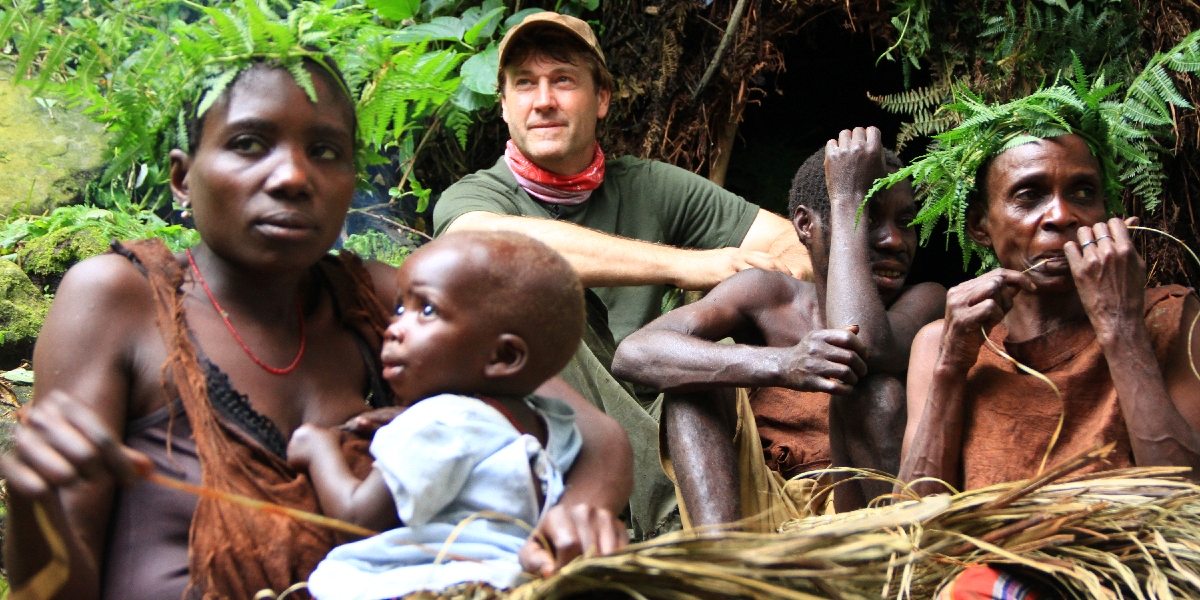
Perhaps the most visible aspect of Wiese’s work is his Emmy-winning television series Born to Explore, which has introduced millions to cultures, wildlife, and environmental issues across the globe. Wiese has made exploration entertaining and educational by combining stunning cinematography with compelling narratives. “Television is one of the most powerful tools we have for inspiring curiosity,” Wiese says. “If we want to motivate the next generation of explorers, we must make discovery exciting and accessible.”
His efforts have not gone unnoticed. Those recognized by EC50 and other initiatives credit Wiese with opening doors and providing opportunities. “Being named an EC50 honoree truly turned my world upside down in a great way,” says Dr. Britney Schmidt, a polar explorer. “Before that, I was more of a silent member of The Explorers Club, but this recognition connected me with an incredible community of like-minded explorers who see the world in unique ways.”

Beyond his contributions to media and science, Wiese has emphasized collaboration as the key to future exploration. “No one explores alone,” he states. “The best discoveries happen when we work together, share ideas, and learn from one another.” Under his leadership, The Explorers Club has fostered partnerships with organizations like Rolex and Discovery Networks, helping to fund innovative research and fieldwork.
As the world changes, Wiese remains involved in exploration, seeing it as a way to engage with global challenges such as climate change and biodiversity conservation. “I want people to see exploration as something bigger than a single moment of adventure,” Wiese explains. “It’s about the ongoing journey of understanding our world, its people, and our place in it.”
Richard Wiese has transformed exploration into something thrilling and significant through his work. He has secured his position as a visionary leader by bringing adventure into mainstream media and helping the next generation of explorers have the resources and recognition they deserve. Whether through his work at The Explorers Club, his television career, or his advocacy for science and conservation, Wiese continues to prove that exploration is about more than just discovery—it’s about shaping a better world for all.
Published by Tom W.