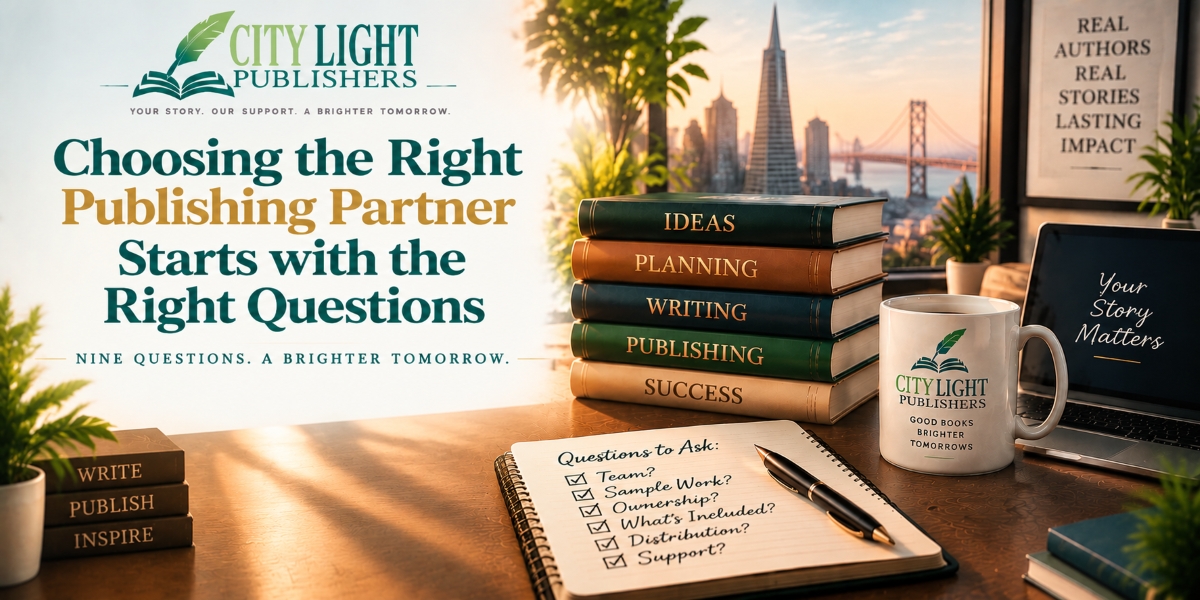
Finding the right publishing partner can be one of the most important decisions an author makes. A simple search for the best book publishing company often produces countless similar promises, professional support, experienced teams, and complete publishing solutions. However, choosing a publishing company should involve more than comparing websites or pricing.
The right questions can help authors understand how a company operates, who will handle their project, what services are included, and whether they will maintain control over their finished book.
City Light Publishers emphasizes a transparent approach to publishing by encouraging authors to evaluate publishing partners based on specific factors such as expertise, ownership, services, distribution, and communication.
1. Who Will Actually Work on Your Book?
One of the most important questions authors should ask a book publishing company is not only about the company itself, but about the individuals assigned to their project.
Authors should know:
● Who will write or assist with the manuscript?
● Which editor will review the book?
● Who will design the cover?
● Does the team have experience in the book’s specific genre?
A publishing company’s size matters only when the right professionals are assigned to the right projects. City Light Publishers describes a team structure that includes writers organized by niche and editors matched according to subject areas.
2. Can You Review a Sample Before Committing?
A portfolio can show a company’s previous work, but a sample created from an author’s own material provides stronger evidence.
Before selecting professional publishing services, authors can request:
● A sample edit using their manuscript pages
● A sample chapter for ghostwriting projects
● Examples of formatting and design work
For editing projects, a marked-up sample of several manuscript pages can help authors understand the quality and approach of the editor. For ghostwriting, a sample chapter can demonstrate whether the writer can match the author’s intended voice.
3. Who Owns the Finished Book?
Ownership is one of the most important topics in publishing.
Before signing with a self-publishing company, authors should understand:
● Who owns the copyright
● Who controls publishing rights
● Who receives royalties
● What happens with future formats and territories
City Light Publishers states that authors retain 100% ownership, rights, and royalties for their books. However, authors should always review the official agreement because contract terms determine the actual ownership arrangement.
4. Who Controls Your Retailer Accounts?
Book ownership is connected not only to copyright but also to account control.
Authors should ask:
● Who owns the Amazon KDP account?
● Who controls book updates?
● Who can change pricing or descriptions?
● Will the author have direct access?
If a book is published through company-controlled accounts, authors may have limited control over important changes even if ownership rights are stated elsewhere.
A strong publishing relationship allows authors to maintain appropriate access and control over their publishing accounts.
5. What Services Are Included in the Publishing Package?
Many companies advertise a “complete publishing package,” but authors should request a detailed breakdown of included services.
A professional book publishing service proposal should clearly explain:
● Developmental editing
● Line editing
● Proofreading
● Print and ebook formatting
● Cover design concepts and revisions
● Distribution setup
● Print-on-demand services
● Audiobook production
● Marketing support
City Light Publishers lists a wide range of services, including ghostwriting services, editing, formatting, cover design, printing, audiobook narration, author websites, SEO content writing, and book marketing support.
6. How Many Revision Rounds Are Included?
Revision policies should always be clearly defined before work begins.
Authors should understand:
● How many revision rounds are included
● What qualifies as a revision round
● What additional changes may involve extra costs
A clear revision structure helps prevent misunderstandings and ensures both the author and publishing team have the same expectations throughout the project.
7. Which Distribution Platforms Are Available?
A successful publishing strategy requires reaching readers through appropriate channels.
Authors should ask whether their publishing partner supports major platforms such as:
● Amazon KDP publishing
● Barnes & Noble
● Kobo
● Apple Books
● Google Books
● IngramSpark
● Draft2Digital
Authors should also understand whether distribution is wide or exclusive and whether the publishing company explains the advantages and limitations of each option before making recommendations.
8. What Happens to Your Files If the Relationship Ends?
Authors should always understand what happens to their publishing materials after completion.
A professional author publishing service should provide access to important files, including:
● Editable manuscript files
● Cover source files
● Print-ready PDFs
● Final publishing assets
Having access to these files allows authors to maintain flexibility for future updates, editions, or working with another publishing professional if needed.
9. Can You Speak With an Author in Your Genre?
Testimonials on websites can be helpful, but speaking directly with another author can provide deeper insight.
Authors can ask for:
● References from similar genres
● Examples of published books
● Real experiences with the publishing process
Independent research also matters. Authors should review published titles, examine book listings, read sample pages, and evaluate the quality of covers and formatting before making a decision.
Understanding What a Publishing Company’s Track Record Means
Experience can provide valuable insight into a company’s stability and ability to adapt to changes in the publishing industry.
City Light Publishers states that it was founded in 2009 and reports more than 10,000 published books and over one million copies sold across its titles. These figures are company-provided claims and should be evaluated alongside other research and due diligence.
A company’s history can show experience, but the most important factor remains whether the company is the right fit for an author’s specific book, genre, and goals.
Finding the Right Publishing Partner for Your Book
There is no single publishing company that is the perfect match for every author. Different books require different levels of expertise, creative approaches, and publishing strategies.
The best book publishing company is one that:
● Understands your genre
● Provides clear service details
● Explains ownership terms
● Allows you to review agreements
● Offers transparent communication
● Provides evidence of quality work
Choosing a publishing partner is not only about finding a company that offers many services. It is about finding a team that understands your specific project and provides the support needed to bring your book to readers.
City Light Publishers provides a full range of publishing services designed to help authors move from manuscript development to professional publication while maintaining clarity around ownership, rights, and publishing options.