
Straight talk helps here. If you have bad credit and need business funding by tomorrow, you’ve got both real options and real dangers. So here it is in the plainest form available: a run of good news and bad news, in pairs, followed by what to do about each.
Good News #1: Bad Credit Doesn’t Automatically Rule You Out
Many online lenders and funders base their decisions heavily on recent business cash flow. A company with steady deposits and a clean bank account may be approved despite a personal score in the 500s. Some products have no fixed minimum score.
Bad News #1: Approval Isn’t the Same as a Good Deal
Lower scores generally come with higher prices, smaller amounts, shorter terms, and more frequent payments. Someone with a 550 score might see a factor rate of 1.4 or higher, while a well-qualified borrower might see 1.15 for a similar product.
What to do: Compare in dollars. On a $20,000 deal:
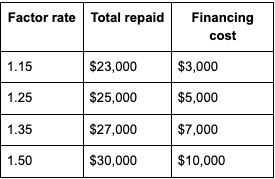
If you repay over six months, even the middle rows represent a substantial annualized cost. Ask yourself whether the use of funds will earn more than the amount in the far right column.
Good News #2: Cash Flow Can Speak Louder Than Your Score
Reviewers often focus on your average monthly deposits, how frequently deposits arrive, negative days, and existing debt payments. If those look solid, your application tells a better story than your score alone. A guided tool such as the Fundivi loan-match questionnaire can help you narrow down which product type best fits your actual profile.
Bad News #2: Your Bank Statements Can Hurt You, Too
Statements with overdrafts, returned payments, and several existing debits could cause a decline even with an acceptable score.
What to do:
- Count your negative days for the last three months
- Add up all current daily and weekly debt payments
- Compare those payments to your deposits
- If you can wait, keep the account positive for one full cycle
Good News #3: There’s More Than One Kind of Fast Financing
Different products rely on different information, so bad credit doesn’t affect them equally.
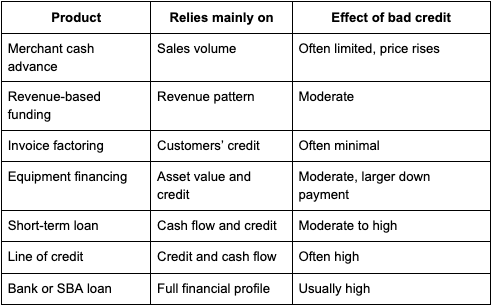
The right choice could be one you hadn’t considered. If you bill other businesses, factoring might sidestep your score almost entirely, though first-time setup usually takes longer than a day. If you need a truck, the truck helps secure the deal.
Bad News #3: Bad Credit Attracts Bad Actors
Owners in a hurry with poor credit are prime targets. Be especially alert for:
- “Guaranteed approval” claims
- Requests for an upfront fee, gift card, or wire before funding
- Texts or calls from strangers claiming you’re already approved
- Companies that won’t provide a street address or written terms
- Pressure to sign before you’ve read the agreement
What to do: Verify any company independently, using a phone number you found yourself. Legitimate providers typically take fees from proceeds or disclose them clearly. A resource on alternatives to merchant cash advances may also show you that there are choices besides whichever offer called you first.
Good News #4: You Can Improve Your File Within a Day
You can’t fix your score overnight, but you can present your situation well.
- Gather three to six months of complete statements
- Prepare a short explanation of what caused your credit problems
- List all debts honestly
- Confirm that your business registration is current
- Make sure names match across all documents
- Apply early on a weekday and stay reachable
Explanations matter. “I had a medical emergency in 2024, and two accounts went to collections. They’ve since been settled, and the business has had 14 straight months of growth” reads very differently from an unexplained low number.
Bad News #4: Some Issues Can’t Be Written Away
An active bankruptcy, large unresolved tax liens, recent defaults on other funders, or severe account problems will often stop an application regardless of how well it’s presented.
What to do: Gather documentation on any tax payment plan or settled debts. If an obligation can’t be resolved today, consider nonprofit options such as community development financial institutions, or get free guidance through a Small Business Development Center. Be careful, too, about who you share documents with. This press release on fraud in business financing is a useful reminder that a rushed application can expose you to more than a high rate.
Good News #5: A Fast Loan Can Be a Stepping Stone
Paying a short-term obligation on time, while your statements improve, can position you for cheaper financing later. Some lenders report to commercial bureaus, which can help establish your business credit file. Ask each provider whether it does.
Bad News #5: It Can Also Become a Trap
The most dangerous pattern is refinancing or stacking short-term products to meet payments on earlier ones. Each round adds fees, and the daily debits take more of your revenue.
What to do: Before you sign, calculate your daily or weekly payment as a share of average deposits. If you’re already above about 15% to 20% of deposits in debt payments, be very careful about adding more. A free counselor can help you examine options like negotiating with existing creditors.
Good News #6: You Have Choices Besides Borrowing
Sometimes the fastest and cheapest money doesn’t come from a lender:
- Ask major suppliers for extended terms
- Offer a modest early-payment discount to customers
- Sell unused equipment or excess stock
- Take deposits on upcoming work
- Ask your landlord about a short deferral
Even if these only cover part of your need, reducing the amount you borrow reduces your cost at a high rate.
Bad News #6: Comparison Sites Aren’t Always Neutral
Many websites are paid when you click or apply, so a “top lender” ranking may reflect commercial relationships. Resources like the BusinessLoansCompanies.com bad credit lender list can offer names to look into, but you should always check a site’s disclosures and research each company on your own.
The Bottom Line
Yes, you can sometimes get business funding within 24 hours with bad credit, particularly with steady revenue and a complete file. Expect to pay more. Calculate the total cost, verify the provider, and be honest about whether the money will make your business stronger or simply postpone a problem.
How to Talk About Your Credit on the Phone
Sooner or later, someone will ask about your score. Answer directly, give the reason in one or two sentences, and move on to what has changed since then. Reviewers hear excuses all day, so facts carry more weight: when the problem occurred, whether it has been resolved, and what your recent deposits look like now.
Frequently Asked Questions
What counts as bad credit for a business loan?
Scores below about 580 to 620 are often treated as poor, but cutoffs differ by provider.
Will a low-credit loan raise my score?
Only if the lender reports positive payments, and many don’t report to personal credit bureaus. Ask first.
Can I get a loan with a recent bankruptcy?
Some funders consider discharged bankruptcies after a waiting period. An open bankruptcy is usually disqualifying.
Can a partner with better credit help?
Possibly. A co-owner or guarantor could strengthen the file, but they’d share the legal responsibility.
Is a personal loan a better option?
Sometimes, but it puts your personal finances directly at stake. Compare the rates and consequences carefully.
How much can I borrow with bad credit?
Amounts usually depend on deposits and are often smaller than the same revenue would support with better credit.
Should I fix my credit first?
If you can wait, even a few months of improvement may lower your cost significantly.
Are there grants for owners with poor credit?
Some exist, typically competitive and specific to certain locations or groups. They rarely provide money within a day.
Do lenders check business credit as well?
Many check both personal and business credit, if a business file exists.
Disclaimer: This article is for informational purposes only and does not constitute financial or legal advice. Business loan eligibility, rates, fees, and funding timelines vary by lender and credit profile. Approval or funding within 24 hours is not guaranteed. Business owners should carefully review all financing terms and consult a qualified financial professional before making decisions.