By Jim Fulton
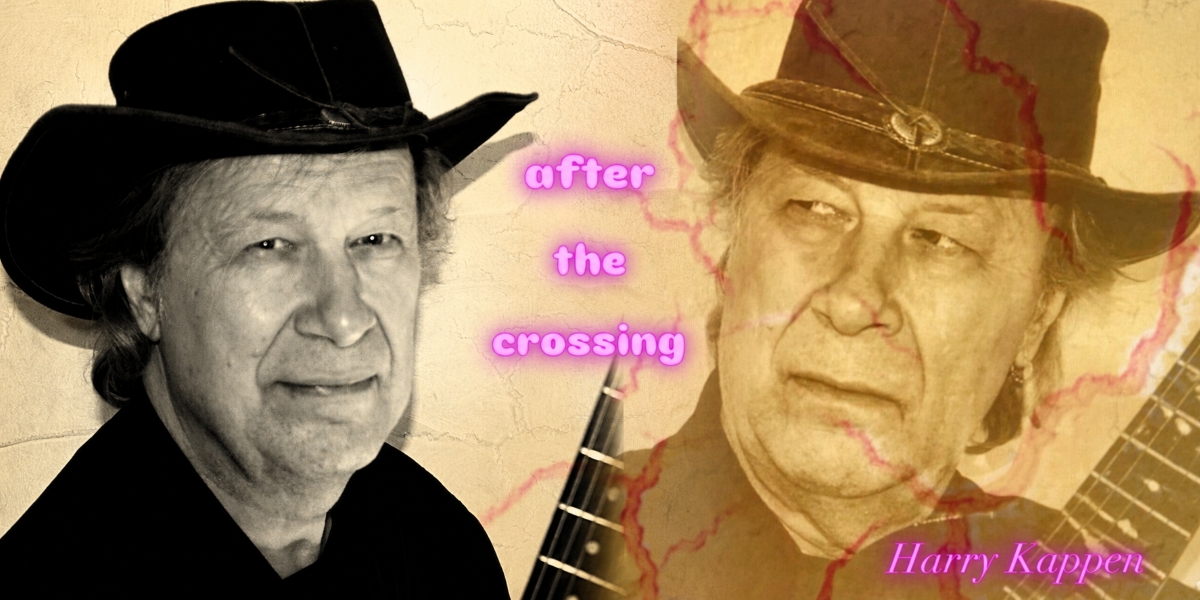
By the time Harry Kappen reaches the closing moments of After the Crossing, the listener understands that this is not merely an album about relocation. It is an album about transformation. The Dutch-born singer-songwriter, multi-instrumentalist, and producer has built his latest work around a literal crossing, from Europe to Mexico, but the record’s deeper concerns are emotional, philosophical, and profoundly human.
Kappen has long demonstrated a gift for marrying thoughtful lyricism with accessible melodies, but After the Crossing may be his most cohesive statement to date. Written, performed, and produced almost entirely by Kappen himself, the album reflects the confidence of an artist who has spent decades refining both his craft and his understanding of the world around him.
The album opens with “Balance,” a song that immediately establishes its thematic ambitions. Addressing political polarization, misinformation, and ideological extremes, Kappen argues not for one side or another but for the increasingly rare virtue of moderation. The track’s central refrain, finding balance between black and white while debating the gray, captures a sentiment that feels both timely and timeless. Musically, the song pairs polished guitar work with a measured vocal performance, allowing the message to emerge naturally rather than through force.
That same sense of purposeful restraint carries into “No Delays,” one of the album’s most autobiographical moments. Written during a period of significant personal transition, the song captures the exhilaration and anxiety that accompany life-changing decisions. Kappen’s performance is particularly effective here, conveying determination without sacrificing vulnerability.
Love, unsurprisingly, serves as a central pillar throughout the album. “We’re Going to the Max” and “While Life’s Rushing By” function as companion pieces celebrating commitment and partnership. These songs avoid the clichés that often plague contemporary love songs by grounding their emotions in specific experiences. Kappen isn’t writing about idealized romance; he’s writing about the hard-won joy of choosing someone and building a life together.
The album’s most compelling narrative arrives with “Distant Shore.” Inspired by the experiences of refugees fleeing conflict and uncertainty, the song broadens the album’s perspective beyond Kappen’s personal journey. The lyrics paint vivid images of displacement, endurance, and hope. While many songwriters struggle to address global issues without becoming heavy-handed, Kappen approaches the subject with empathy and humility. The result is one of the album’s emotional high points.
Elsewhere, “Arms Wide Open,” co-written with Kappen’s sister Hanneke, explores loss and acceptance with remarkable grace. The song’s understated arrangement allows its emotional core to resonate fully. Similarly, “Take This Step” offers a hopeful meditation on movement and possibility, suggesting that change itself can become a catalyst for growth.
The album’s social commentary resurfaces in “The Real Thing” and “Good Samaritans.” In the former, Kappen questions a culture increasingly dominated by performance, distortion, and superficiality. In the latter, he celebrates ordinary people whose acts of kindness often go unnoticed. Both songs reflect an artist more interested in moral inquiry than easy conclusions.
Throughout After the Crossing, Kappen’s experience as a music therapist seems to inform his songwriting. There is a deep sense of empathy woven into these compositions. Even when addressing contentious subjects, he remains curious rather than confrontational. That quality gives the album a warmth and humanity that many contemporary records lack.
Musically, the album draws from alternative rock, singer-songwriter traditions, and subtle progressive influences. The production remains consistently strong, balancing clarity with intimacy. Kappen’s multi-instrumental talents never become an exercise in virtuosity; every musical choice serves the song.
The closing track, “Now,” provides a fitting conclusion. Quiet, reflective, and philosophical, it contemplates the fleeting nature of existence and the importance of presence. It serves as a reminder that while journeys may define us, it is our awareness of the present moment that ultimately gives them meaning.
After the Crossing succeeds because it refuses easy answers. It is an album about uncertainty, faith, love, and perseverance. Most importantly, it is an album made by an artist willing to examine life’s complexities without simplifying them. In a musical landscape often driven by immediacy and distraction, Harry Kappen has created something increasingly rare: a record that rewards reflection.