By: Daniel Rourke
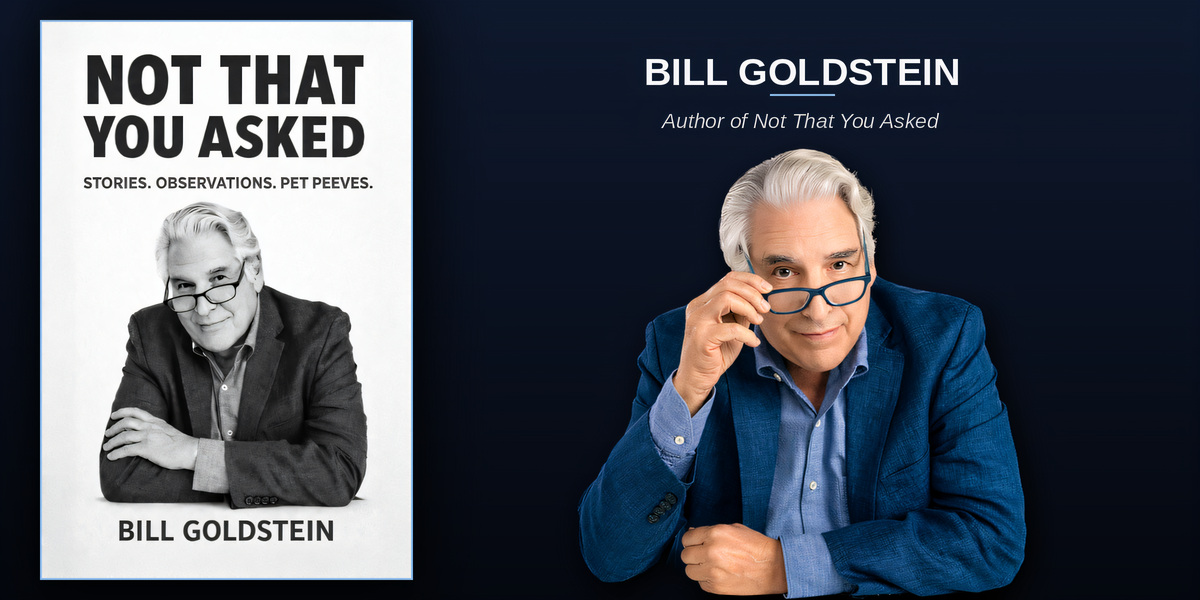
Penn Station is finally getting an overhaul, and Bill Goldstein has been waiting for this moment for years. His new essay collection, “Not That You Asked: Stories. Observations. Pet Peeves.,” takes aim at what he calls the most hated building in New York City. Now that an $8 billion renovation has been announced, something is finally being done about it.
In June, U.S. Transportation Secretary Sean P. Duffy stood alongside Amtrak and a development team called Penn Transformation Partners and unveiled a plan New Yorkers have wanted for sixty years. The renderings show an $8 billion overhaul with a columned stone facade, a sunlit concourse, ceilings soaring more than fifty feet, bronze finishes, and a large station clock. A bas-relief of the city skyline rounds out the design. Construction is expected to begin late next year.
For the roughly 600,000 people who pass through Penn Station every day, more than JFK, LaGuardia, and Newark airports combined, the reaction has ranged from relief to disbelief. For Goldstein, it reads like a hallelujah moment.
Goldstein has been making the case against Penn Station in print, and he does not pull punches. In his new book, he calls today’s station “a subterranean disgrace” and “a colossal civic embarrassment,” describing it as a “dank, odiferous, suffocating, confusing, dangerous labyrinth.” His verdict on the current structure reads like a line many writers might wish they had crafted themselves: “a brutalist relic that feels like it was designed by someone who hates people.”
What makes the essay more than a rant is that Goldstein remembers what was lost. The original Penn Station, completed in 1910, was a granite and marble structure covering eight acres, with a main waiting room modeled on ancient Roman baths and a ceiling that climbed 150 feet under a canopy of iron and glass. It was, at the time, the largest room in the world.
Its demolition in the 1960s outraged the public so deeply that it launched the modern architectural preservation movement. That outcry, Goldstein notes, helped save Grand Central Terminal from a similar fate. He revives the lament of an architectural historian who mourned the swap: passengers who once “entered the City like gods” are now reduced to scuttling in “like vermin.”
That combination, a sharp eye, a long memory, and a refusal to accept things as they are, drives Goldstein’s entire collection. The book takes its title, and its spirit, from the late Andy Rooney, the grumpy conscience of 60 Minutes who spent thirty-three years turning everyday objects into small revelations. Goldstein works the same territory across ninety short, edgy, companionable essays.
One minute he decodes the Hamptons. The next he explains why cellphones have become the modern equivalent of six-guns in the Old West, kept in holsters much the same way. Readers meet President George H.W. Bush, Henry Kissinger, Gore Vidal, Billie Jean King, and a stranger on a red-eye who pressed a Claddagh ring into his hand at dawn.
“There’s a certain kind of person who can’t let the world go by unremarked upon,” the book’s description reads. Goldstein is unmistakably that person. Some people simply see the world. He notices it, then tells readers what he thinks, whether or not they asked.
The Penn Station essay lands especially well because the debate it wades into is suddenly, genuinely live. The new design is not without controversy, with Amtrak and the MTA already publicly sparring over who does what. Still, the fact that stakeholders are finally arguing about how to fix Penn Station, rather than whether to fix it, is exactly the point Goldstein has been making. He looked at the most dysfunctional space in the country’s transit infrastructure and refused to look away.
Equal parts memoir, social observation, and good-natured grumbling, the book can be read straight through or opened anywhere. Within a page or two, many readers will likely catch themselves thinking, “Hmmm, I never thought of it that way.” That reaction, the author would say, is the whole idea.
“Not That You Asked: Stories. Observations. Pet Peeves.” by Bill Goldstein is available now on Amazon in Kindle, paperback, and hardcover. Learn more at billgoldstein.com.