By: Kiana Valez
From New York stand-up and acting to Black Phillip and Man School 202, Nero’s career has evolved without ever losing the curiosity that first made him a comedian.
There is a certain point in a long entertainment career when an artist has to decide whether to protect what already works or keep evolving.
Dante Nero has never been particularly good at standing still.
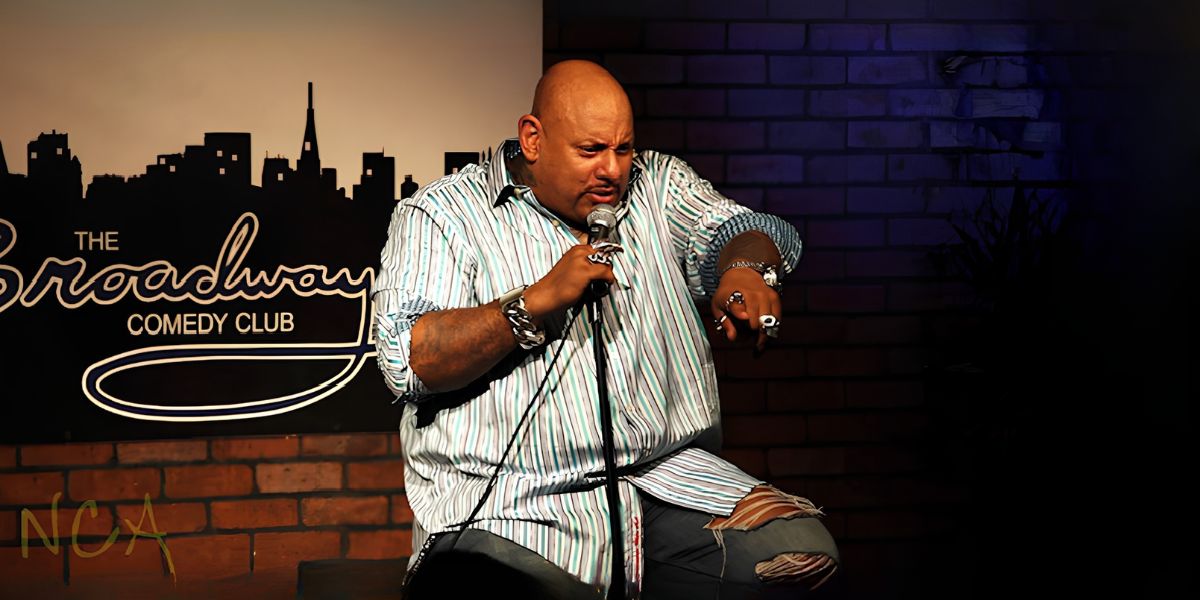
For roughly 26 years, the Brooklyn native has worked as a stand-up comedian, building a reputation in New York while moving through acting, radio, podcasting, and eventually a second identity as a commentator on relationships and social dynamics.
The transitions make more sense when you understand what originally drew Nero to comedy.
He watches people.
He notices the things they do not say, the contradictions between what they claim to believe and how they actually behave, and the strange ways pride, fear, attraction and insecurity can change a conversation.
For a comedian, those contradictions are material.
For Nero, they eventually became something more.
Long before entertainment became his profession, his life had already taken several unlikely turns. He studied biology and psychology at SUNY New Paltz and once imagined a future in genetic engineering. He trained in martial arts, competed in fencing, worked with young people in foster care, and spent about a decade working as a male exotic dancer.
Then stand-up became the place where all of those experiences could coexist.
Nero entered the New York comedy world and stayed there long enough to watch generations of performers come through it. He named comedians including Dave Chappelle, Neal Brennan, Tracy Morgan, Mike Epps, and Godfrey among the notable people he has worked around during his career.
But one comedian became much more than a professional connection.
Patrice O’Neal was Dante Nero’s best friend.
That friendship eventually put Nero behind the microphone for one of the most influential chapters of his career.
When Comedy Became a Conversation
On The Black Phillip Show, Nero and O’Neal took the instincts of comedians and applied them to relationships.
They talked about sex, attraction, jealousy, commitment, and the differences between men and women with the same willingness to push an uncomfortable idea that made O’Neal such a distinctive comic voice.
“We wanted to have a show where we talked about things that men talked about amongst themselves,” Nero remembers.
At the time, it was simply a show.
In hindsight, the format looks remarkably familiar.
Years later, podcasts and social media would become flooded with debates about dating, masculinity, and relationship dynamics. Nero had already spent years inside those conversations before they became an industry.
After O’Neal died, Dante eventually continued exploring the ideas through The Beige Phillip Show and later Man School 202.
Yet what makes Nero’s career interesting is that the new platform did not require him to stop being a comedian.
It gave his comedy another place to go.
Comedy Without the Comfortable Distance
A comedian can joke about relationships and leave the audience laughing.
Man School 202 asks what happens after the laugh.
Why did someone stay in a relationship that clearly was not working?
Why does confidence disappear around a particular person?
Why do men and women repeatedly misunderstand what the other side is trying to communicate?
And how much of what people blame on their partners actually begins with themselves?
Those questions gradually pushed Nero beyond entertainment alone.
He now describes relationships and social dynamics as his “wheelhouse,” but he approaches them with the sensibility of someone who has spent decades in comedy rather than someone who began in traditional self-help.
There is less interest in perfection.
People are messy.
Nero expects them to be.
The objective is learning how to navigate that mess without losing yourself inside it.
A Career That Keeps Expanding
Nero’s current philosophy has also matured beyond many of the conversations that first made Black Phillip provocative.
He talks increasingly about character.
His personal framework is built around ACE: Authenticity, Credibility and Empathy.
For Nero, those principles are meant to give men something more durable than image or status.
“Character is the most important thing about your value,” he says.
It is an interesting destination for a performer.
Entertainment naturally rewards attention. Comedy rewards applause. Social media rewards visibility.
Nero has spent decades around all three.
Now he is increasingly interested in what remains when the audience leaves.
That shift is also informing the next chapter of his career.
Nero wants to expand the reach of Man School 202, grow his speaking work, develop new content, and eventually take his relationship and social-dynamics conversations to audiences internationally.
Comedy remains part of the plan.
It simply no longer has to be the whole plan.
After more than two decades in entertainment, Dante Nero appears less interested in reinventing himself than in finally allowing all the different versions of himself to exist in the same place.
The comedian.
The actor.
The storyteller.
The friend of Patrice O’Neal.
The relationship commentator.
The mentor.
And the man who wants the audience to leave with something more useful than a laugh.
Asked what he wants his legacy to be, Nero’s answer is shorter than any career retrospective could be:
“That I made people better.”
After 26 years in comedy, that may be the role Dante Nero is most interested in playing next.
Connect With Dante Nero
Website: DanteNero.com
Instagram: @TheDanteNero
YouTube: Man School 202
Patreon: Man School 202