By: Scotty Richter
There is a lovely little contradiction at the center of Gary Pratt’s “4th of July.” The song is named for the most public of American holidays, all those parades, picnics, flags, crowds and explosions in the sky, but the story Pratt tells is almost entirely private.
In fact, it isn’t even July.
It is February, and two people are inside together on what Pratt calls an ordinary night. Nothing remarkable is happening in the larger world. There is no festival outside the window, no band playing in the town square, no fireworks waiting to be launched. Yet between these two people, something is happening that makes all the spectacle of summer seem almost unnecessary.
That is the simple and rather sweet idea behind “4th of July,” featuring Kate Szallar: sometimes another person can become the celebration.
Country music has always understood how much emotional weight can be carried by an ordinary detail. A kitchen table, an empty chair, a gravel road, or an old photograph can contain an entire life when a songwriter knows what to do with it. Pratt works in that tradition here, though with a decidedly contemporary and playful sensibility. He takes the familiar imagery of fireworks and turns it inward, using the holiday not as a setting but as a measure of romantic exhilaration.
The song’s opening is particularly effective because it begins so quietly. “An ordinary February night” is almost aggressively unremarkable. But that is precisely the point. The transformation that follows matters because Pratt starts with nothing grand.
A slow kiss changes everything.
Soon, February feels hotter than summertime, and when the chorus arrives, the private moment has become its own Fourth of July.
There is humor in the metaphor, particularly in the chorus’s “boom boom boom,” but Pratt never treats the relationship itself as a joke. That distinction keeps the song from slipping into novelty territory. He seems genuinely delighted by the idea that love can turn an uneventful evening into something worth commemorating.
Pratt’s singing serves that idea well. He does not need to prove himself with vocal acrobatics. Instead, there is an ease to the performance, a conversational quality suggesting a singer more interested in communicating the song than displaying himself.
That may sound like a small distinction, but it is one of the things that separates storytelling from merely singing words.
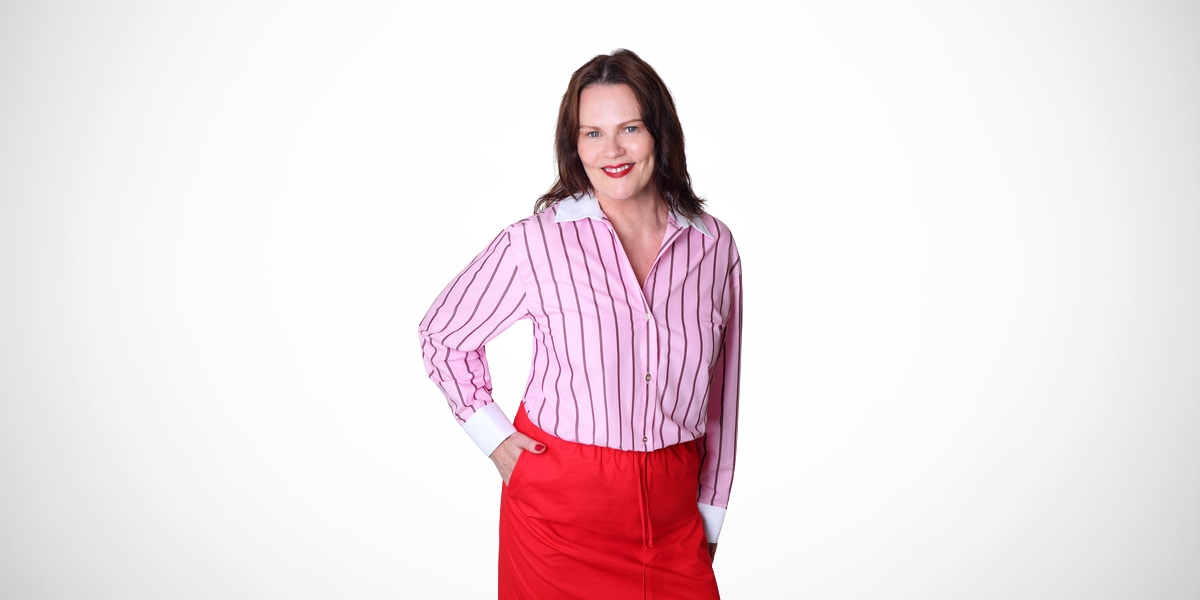
Kate Szallar brings another kind of warmth to the recording. Her presence makes the song feel shared. Romantic songs can sometimes become strangely one-sided affairs, with the listener hearing one person describe a relationship while the other exists only as an idea. Szallar gives this story another human presence.
The chemistry Pratt is singing about consequently feels less theoretical.
There is considerable craft behind that apparent ease.
Producer Adam Ernst, who has played on recordings by Bailey Zimmerman, Mickey Guyton and Chase Matthew, performs every instrument on “4th of July.” It is an impressive achievement, though the best thing one can say about it is that the accomplishment never overwhelms the song.
Ernst plays like an accompanist rather than a man determined to demonstrate how many instruments he can play.
The arrangement is clean and contemporary, with enough rhythmic drive to make the chorus lift while preserving space around the voices. The guitars provide energy without becoming clutter. The production is polished, but it retains enough warmth that Pratt and Szallar remain people rather than components inside a studio construction.
That restraint is especially important because “4th of July” depends upon something easily lost in elaborate production: charm.
The song has plenty of it.
Something is endearing about two adults deciding they do not need a crowd, a blanket on the ground, or any of the traditional machinery of celebration. The party, as the lyric cheerfully observes, is on the couch.
Behind the flirtation lies an unexpectedly durable idea.
We spend much of our lives waiting for officially important days. Birthdays. Anniversaries. Christmases. Fourths of July. We photograph them, plan for them, and attach expectations to them.
Songs, however, often remind us that memory is less organized.
The nights we carry with us are frequently the ones nobody circled on a calendar.
Pratt’s opening February night understands that. It begins as nothing and becomes something because of who is there.
That is also why “4th of July” has more life in it than the title might initially suggest. A purely seasonal song can disappear when the decorations come down. Pratt’s metaphor works precisely because the story happens outside the season. The Fourth of July is simply the language he uses to describe a feeling.
By the closing repetitions of “better and better than the Fourth of July,” the song has stopped being about fireworks altogether.
It is about gratitude for connection.
There are louder songs and more complicated songs. There are records that announce their significance with considerably greater seriousness. Pratt doesn’t appear interested in competing with them.
He has made a warm, playful country song about two people discovering that being together is occasion enough.
Sometimes songwriting is not about finding something nobody has ever felt before.
It is about finding a fresh way to recognize something almost everyone has.
On “4th of July,” Gary Pratt finds it in February, inside an ordinary room, between two people who suddenly have no reason at all to look outside for fireworks.