By: Jessa Marie Dollesin
There are some places that open quietly. And then there are places that seem to arrive at exactly the moment a neighborhood is ready for them.
When Spa & Massage Islington opened its doors in Camden Passage, the response was immediate. Its first month has seen extraordinary demand, with the clinic regularly fully booked as Islington locals discover what has quickly become one of the neighborhood’s most talked-about new health and wellbeing destinations.
And once you step inside, it isn’t difficult to understand why.
This is not the conventional high-street massage experience.
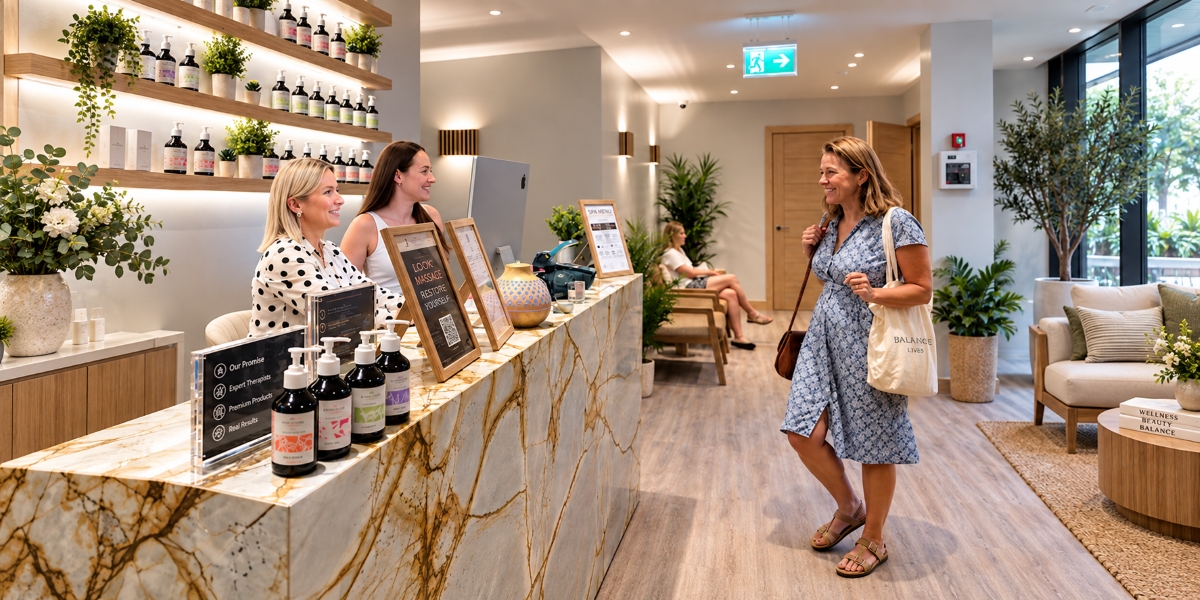
From the moment you enter, there is a sense that considerable thought has gone into how the space should make you feel. Inspired by the restraint and tranquillity of some of Japan’s finest spas, the interiors are sophisticated without being ostentatious. Materials, lighting, sound, and scent work quietly together.
Nothing is there simply to impress.
Everything is there to help you switch off.
That philosophy extends to one of the smallest (and unexpectedly most talked-about) details of the experience: the Buddha tea served to clients. It has already become something of a ritual, with guests regularly commenting on it. It is a simple touch, but perhaps that is precisely the point. Great hospitality is often remembered through the smallest details.
Serious Massage, Beautifully Delivered
The surroundings may feel luxurious, but the substance behind the massage in Islington is what makes this opening particularly interesting.
Spa & Massage has built its reputation around expert massage therapy rather than beauty treatments or occasional pampering. Its therapists bring substantial professional experience, including backgrounds in clinical environments and in prestigious five-star hotel spas.
The result sits somewhere between serious bodywork and attentive hospitality.
A treatment here can feel almost like a night out, an hour deliberately removed from emails, meetings, commuting, training and the relentless noise of London life.
Many clients report leaving in better shape than when they arrived.
Clients come for different reasons: recovery after training, muscular tension, demanding working lives, stress, better rest or simply the feeling that their body needs a complete reset.
It reflects a wider change in how Londoners are thinking about massage.
Rather than waiting until something hurts, more people are making regular expert massage therapy part of their health and wellbeing routine. Research into massage therapy has reported potential benefits including reductions in stress and anxiety, improvements in relaxation and sleep in some populations, and short-term benefits for certain types of pain and post-exercise soreness. The evidence varies by outcome and condition, but the direction of travel is clear. Massage is increasingly being considered as part of recovery and wellbeing rather than reserved purely for special occasions.
Perhaps the simplest benefit, however, is the one clients describe themselves.
They describe feeling better.
Better recovered, they say. Better rested. More ready for the week ahead.
A Hidden Corner of London
Location is another part of the magic.
The clinic sits at 50 Camden Passage, in one of Islington’s most characterful historic enclaves, moments from Angel.
Camden Passage feels almost protected from the London surrounding it. Independent shops, cafés, restaurants and historic architecture create the atmosphere of a neighborhood within a neighborhood. For visitors who have never wandered through it before, it remains one of those wonderful London discoveries hiding in plain sight.
Spa & Massage feels remarkably at home here.
There is something satisfying about finding a wellness space tucked into a historic passage rather than inside a conventional hotel or shopping center.
You arrive through one of London’s most distinctive streets, disappear inside for an hour and emerge back into Islington feeling noticeably different.
From Occasional Luxury to London Ritual
Islington is the ninth Spa & Massage location, marking another chapter for a London brand that has been operating since 2007.
Its expansion also says something about what Londoners increasingly want from wellness.
For years, massage occupied two extremes: the expensive five-star hotel spa or the functional local treatment room.
Spa & Massage is attempting to occupy the space between them, combining highly experienced therapists, beautifully considered surroundings and hospitality with the accessibility required for massage to become something people can do regularly.
That idea may help explain the early interest in Islington.
Because the real luxury being offered here isn’t marble, chandeliers or extravagance.
It is an hour in which nobody needs anything from you.
An hour to recover.
An hour to reset.
An hour devoted entirely to how your body feels.
In a city that rarely stops moving, that may be one of the most valuable luxuries of all.
And hidden among the boutiques and cafés of Camden Passage, Spa & Massage Islington has added a distinctive place to look for it.
A London Brand Built Around Better Outcomes
Founded by Alykhan and Nicole Thobani in 2007, Spa & Massage was created around a simple idea, bridging the gap between traditional massage and modern health and wellbeing.
From the beginning, the founders have sought to combine expert massage therapy with evidence-informed thinking, drawing on scientific research and input from medical and health professionals to better understand how massage can support recovery, relaxation, and overall health & wellbeing.
Nearly two decades later, that philosophy still defines the brand, built on expert massage therapy, informed by science and delivered by experienced therapists, with the aim of supporting clients in their everyday lives.
It also helps to know what a session involves before booking one. A good therapist will ask where the pain sits, how long you spend at a desk, and whether anything specific has flared up recently. The treatment that follows is targeted rather than generic, spending time on the areas that need it instead of working evenly across the back. Clients often describe looser shoulders afterward, and some notice a day or two of mild soreness as the muscles recover, which is normal rather than a cause for concern.