By: Jack Mercer
Rock music has never suffered from a shortage of legends. It has its gods, its martyrs, its rebels, and its cautionary tales. But somewhere between the platinum plaques and the tabloid headlines exists another class of musician, the ones who keep the engine running. They play county fairs and corner bars, open for touring acts that barely remember their names, and spend more time on highways than in hotel suites. They rarely become icons, yet without them, rock culture wouldn’t exist.
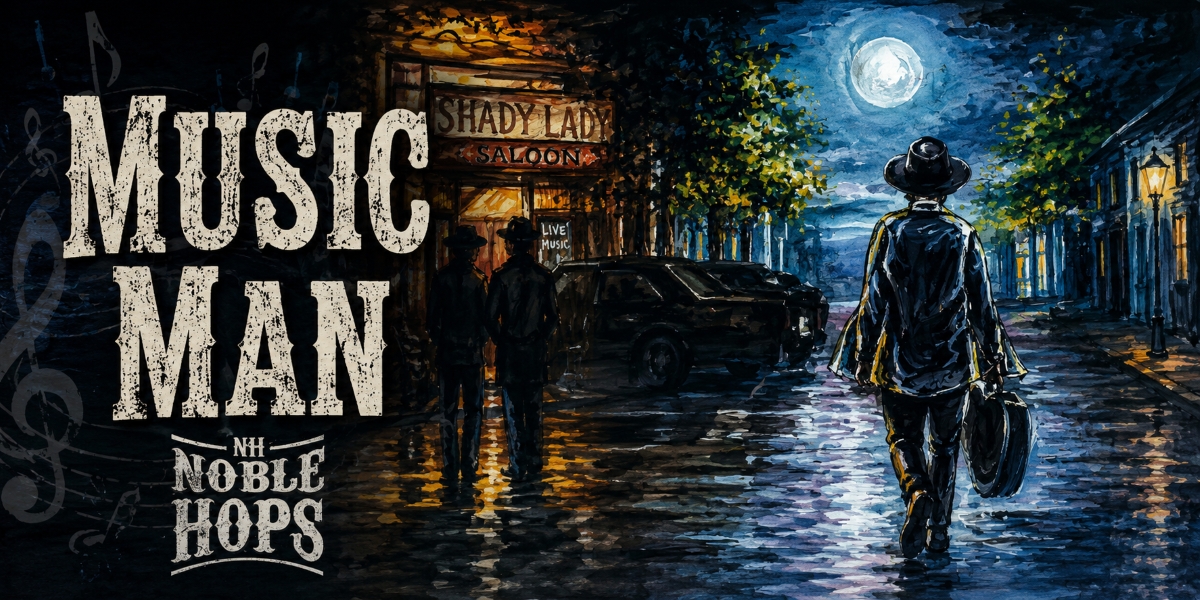
Noble Hops’ latest single, “Music Man,” is dedicated to those lifers.
Instead of romanticizing excess or chasing modern rock’s increasingly polished aesthetic, the Western Pennsylvania quartet delivers something far more enduring: a song about commitment. Not commitment to fame, but to music itself. It’s an old-fashioned idea wrapped in crunchy guitars, blue-collar storytelling, and enough sincerity to make cynicism feel almost out of place.
From its opening line, “I didn’t sell my soul for rock and roll, but it became my way of life”, frontman Utah Burgess establishes the song’s central premise. This isn’t another retelling of the crossroads myth. There are no supernatural bargains or overnight success stories. The narrator didn’t become a legend because of destiny. He became a musician because he never stopped showing up.
That distinction gives “Music Man” its emotional weight.
Burgess writes from the perspective of someone who understands the economics of chasing a dream. Empty bars, worn guitars, failed marriages, and uncertain paychecks all make appearances, but they’re presented without self-pity. The song doesn’t ask listeners to mourn the sacrifices. It asks them to recognize them.
That’s a subtle but meaningful difference.
Musically, Noble Hops lean comfortably into heartland rock, drawing from the tradition of guitar-driven bands that value storytelling as much as musicianship. Tony Villella’s guitar work balances muscular rhythm playing with tasteful lead flourishes, never overwhelming the narrative. Johnny “Sleeves” Costa’s bass lines provide warmth and momentum, while Brad Hulburt’s drumming keeps everything moving with the dependable confidence of musicians who know exactly where the groove lives.
The arrangement isn’t flashy, and that’s precisely the point.
Every instrument serves the song rather than competing for attention. The result feels cohesive, lived-in, and refreshingly unconcerned with trends. Recorded with producer Jazz Byers, “Music Man” sounds like four musicians sharing the same room instead of assembling performances one track at a time. The production leaves enough space for imperfections to breathe, giving the recording an organic quality that’s becoming increasingly rare.
The chorus, “Music Man, playing across the land”, is built on repetition rather than complexity. On paper, it almost seems too simple. In practice, it becomes surprisingly effective. Each return reinforces the identity of the song’s protagonist until the phrase feels less like a hook and more like a personal creed.
One of the song’s greatest strengths is its refusal to confuse recognition with success.
Today’s music landscape often encourages artists to measure their value through algorithms, playlists, and social metrics. “Music Man” quietly argues for another definition. The narrator doesn’t need millions of listeners to validate his purpose. The act of writing, performing, and continuing is reward enough.
Near the song’s conclusion comes its most poignant moment: “The time will come when I’ll be gone, but my songs they will live on.” In lesser hands, the sentiment could feel self-important. Burgess delivers it with humility instead. It’s less a declaration of legacy than an expression of hope that somewhere, someday, another musician might find inspiration in songs left behind.
That perspective transforms “Music Man” from a personal story into a universal one.
It’s a tribute to the countless performers who keep local music scenes alive. The guitarists play on Friday nights after a forty-hour workweek. The songwriters filling notebooks no publisher may ever see. The bands that measure success by the number of people singing along instead of the number of streams on a dashboard.
Noble Hops understands that rock and roll has always depended on those musicians as much as its superstars.
“Music Man” isn’t trying to reinvent the genre. It doesn’t need to. Instead, it reminds listeners why rock’s core values, authenticity, perseverance, and honest storytelling, still matter. It’s a song built on calloused hands rather than carefully cultivated mythology, and that authenticity resonates long after the final chord fades.
In celebrating the working musician, Noble Hops has written something that feels increasingly uncommon: a rock anthem for the people who never stopped believing, even when nobody was looking.