
The Gap Between a DIY Balloon Arch Kit’s Box Photo and What Actually Shows Up
Someone opens a DIY balloon arch kit the morning of a birthday party, follows every step on the included card exactly, and ends up with something noticeably thinner and less full than the photo on the box. Nothing on the card was wrong. The kit did exactly what it was built to do. It just wasn’t built to do the whole job.
That gap between the box photo and the actual result isn’t bad luck, and it isn’t a defective kit. It’s a specific, explainable skill gap, and it shows up the same way almost every time. Every kit buyer runs into some version of it.
A DIY balloon arch kit isn’t the wrong purchase for every party. But it does have a ceiling, and understanding exactly where that ceiling sits is what actually helps someone decide. This is where that ceiling actually sits, section by section.
What a DIY Kit Can and Can’t Actually Deliver
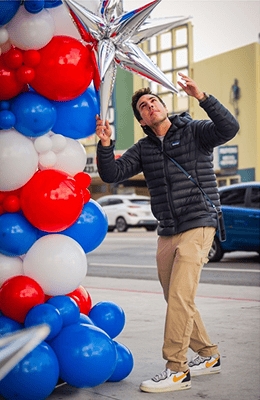
A typical kit includes the balloons themselves, a plastic strip or a simple frame, and an instruction card showing roughly how many of each size to use. That’s genuinely useful information. It tells someone what to buy and roughly how to put it together.
What it doesn’t include is technique, the specific knowledge of how to size and space clusters so the whole shape reads as one continuous line instead of a string of separate balloons.
One party-planning resource is blunt about why that matters: the included supplies like archline or string or tape is often not sturdy enough to support or connect the balloons, causing the arch to collapse or sag.
Cluster sizing sounds minor until you see it done wrong.
Sean Edwards, Founder of The Balloon Guy, has seen that same kit-related disappointment come up again and again over the years.
“A kit gives you the ingredients, not the recipe,” Edwards said. “You can follow every step and still not get the shape to hold, because holding the shape isn’t actually in the instructions.”
That’s the part a kit simply can’t teach in a printed card. That gap is exactly what the next section addresses.
Where Professional Technique Actually Earns Its Cost
That’s precisely where a professional decorator’s technique earns its cost. None of it is mysterious once someone explains it.
Balloon arch structural support isn’t a single trick, it’s a set of specific decisions, how much air goes in each balloon, how tightly clusters get tied together, and how the whole shape distributes its own weight. Get any one of those wrong and the shape sags in exactly the spot where a camera would catch it.
A professional balloon arch accounts for all three at once, before a single balloon goes up.
The Balloon Guy Los Angeles builds each installation around exactly that math, weight, tension, and airflow, rather than assembling a kit and hoping the shape holds for the length of the party.
That’s technique built from repetition, not a formula printed on a card. It’s also why the same kit can produce wildly different results in different hands. That inconsistency is the whole argument for hiring the technique instead of just buying the materials.
Why Timing Is the Part DIY Kits Can’t Solve
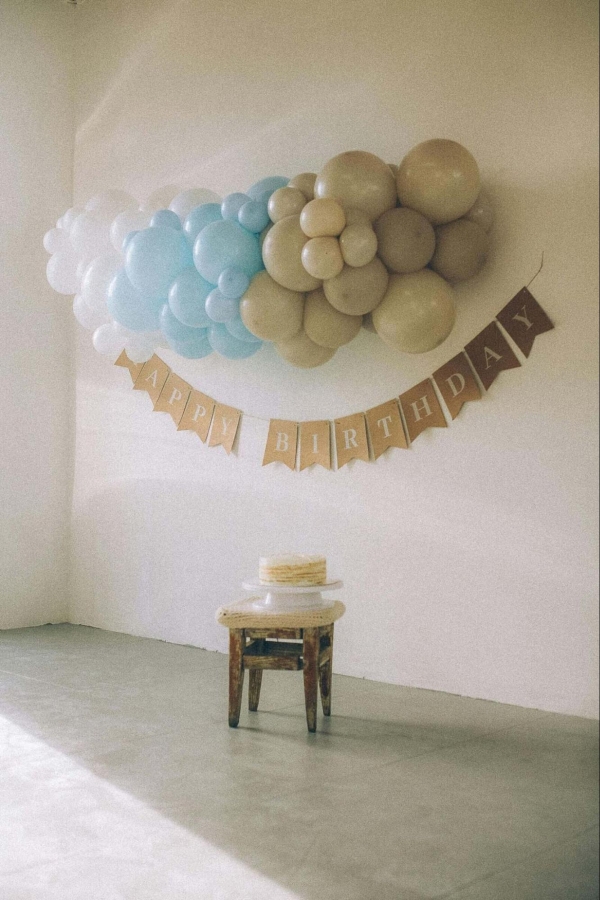
Timing is the part a printed instruction sheet genuinely cannot solve. It’s the part nobody thinks to ask about until it’s already a problem.
Air-filled and helium-filled balloons behave very differently once they’re actually up, helium escapes from latex relatively quickly, which means a helium arch can start looking droopy within hours.
A kit’s instructions rarely specify which fill to use for which shape, or how that choice plays out three hours into a party rather than in the first ten minutes after setup.
Heat makes it worse. An arch built for an outdoor daytime party in July needs different choices than one built for an evening reception indoors, and a kit’s instructions don’t account for that at all.
Edwards treats that variability as the actual job, not an afterthought.
“People assume the hard part is making it look good on arrival,” Edwards said. “The actual job is making sure it still looks good four hours later, after the sun has moved and eighty guests have walked past it.”
No kit’s instruction card accounts for the sun moving. That’s not a flaw in the kit. It’s simply outside what any printed instruction card, however well written, was ever designed to account for.
What a Box Photo Can’t Deliver
None of this makes a DIY balloon arch kit a bad purchase. For a small, low-stakes gathering, a handful of friends, a Tuesday-night dinner, a kit can genuinely do the job.
The stakes change for a milestone birthday someone actually wants photographed and remembered. Nobody plans for a milestone party to look thin in the photos, but that’s exactly what happens when the gap goes unaddressed.
That’s exactly where the skill gap this piece describes stops being theoretical and starts showing up in the actual photos.
Edwards has spent more than fifteen years developing exactly the kind of hands-on technique that closes that gap, the sort that isn’t written down on any instruction card.
That’s the actual decision a reader is making, not kit versus professional in the abstract, but whether this particular event needs that gap closed.
A box photo can promise almost anything. Only technique actually delivers it.